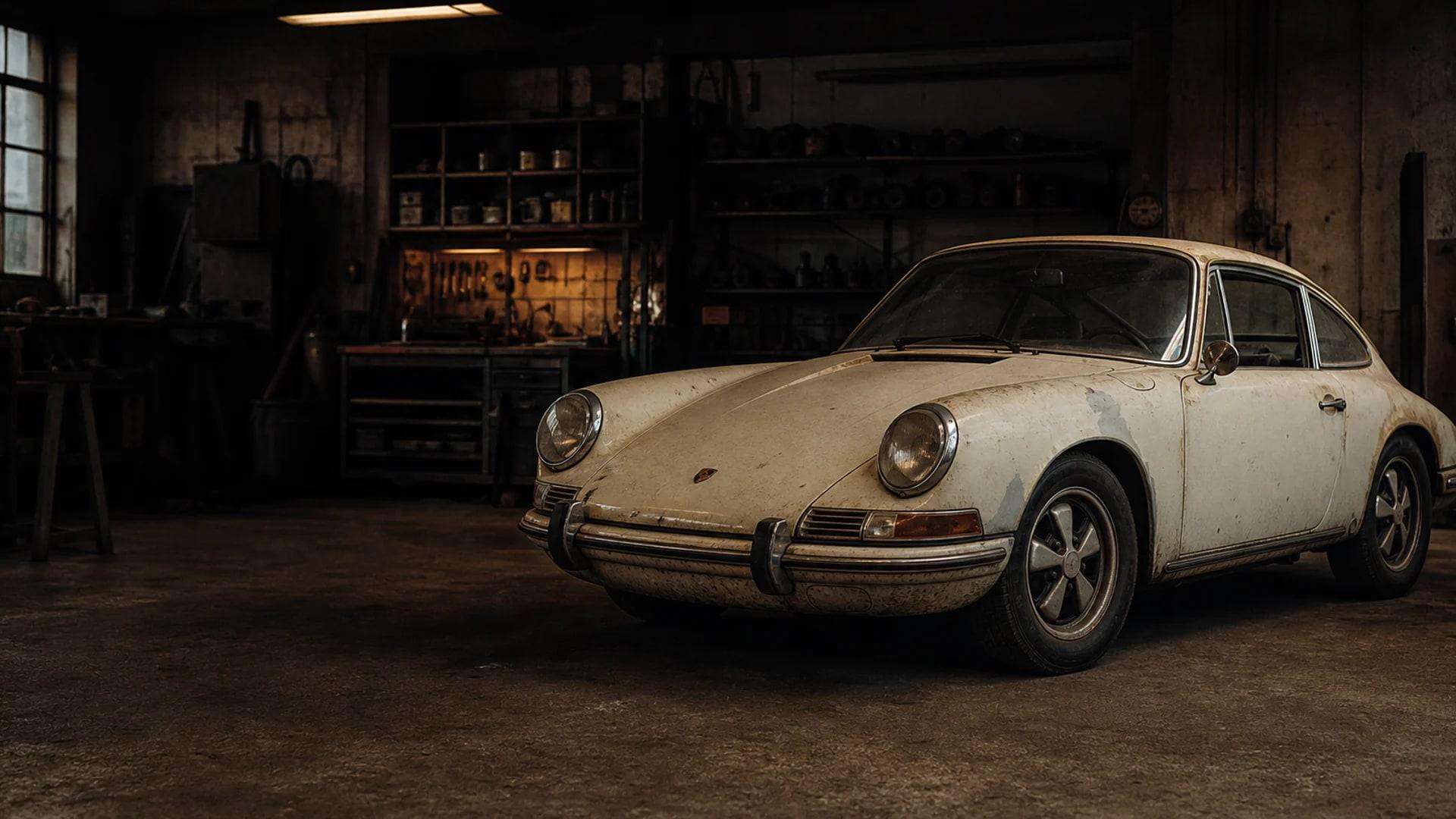
Patina gets romanticized easily, usually by people trying to sell rust as charm. Real patina is not neglect. It is honest age: thin paint on a fender edge, leather that has softened around the driver, a wheel polished by years of hands, old service stickers that place the car in a life before yours.
The difference matters. Corrosion that threatens structure is not character. A dangerous fuel line is not heritage. Dry-rotted tires are not period correct in any meaningful sense. Safety, reliability, and sound mechanical work come first.
But once the car is safe and honest, the question becomes more interesting. Should every imperfection be erased? Should every panel be brought back to showroom condition? Sometimes the answer is yes. Sometimes the better answer is to preserve the parts of the car that cannot be recreated once they're gone.
A full restoration can be beautiful, but it often resets the clock. The car becomes a version of itself, not always the one that survived. Preserved wear can tell a story restoration cannot. It can reveal where the car was used, how it was cared for, and what previous owners valued.
Leaving patina alone is not laziness when it is done with intention. Clean it. Stabilize it. Document it. Repair what needs repair. Then resist the urge to make the whole car anonymous in the pursuit of perfection.
The goal is not to worship decay. The goal is to recognize when age has become part of the car's identity. Some machines deserve to be renewed. Others deserve to be understood before anyone reaches for the sandpaper.