
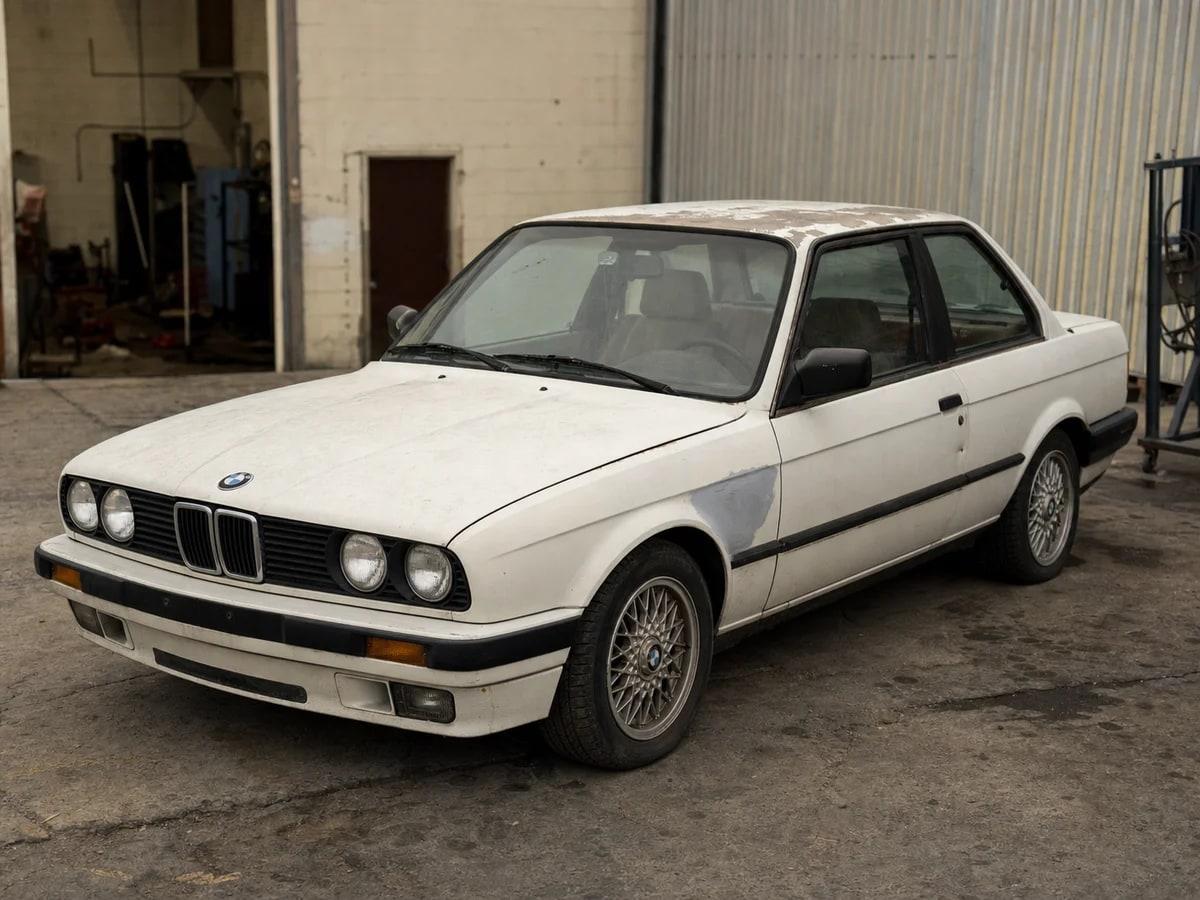
Editorial Showcase — This vehicle is not currently offered for sale through PATINA.
The image represents this model or chassis. The editorial copy below is model-level guidance and does not describe the pictured vehicle’s specific condition, history, or ownership.
1982–1994 · Coupe
BMW 3 Series — E30
The analog BMW that became a language of its own.
Before driver-assist software and turbocharged everything, the E30 taught a generation what a balanced, honest chassis felt like. It remains one of the most approachable ways into analog BMW ownership — as long as age, rust, and prior modifications are taken seriously.
The E30 was BMW's second-generation 3 Series, built from 1982 to 1994 and sold as a two-door coupe, four-door sedan, convertible, and — from 1988 — the 'Touring' wagon. It spanned a wide range of engines, from the modest four-cylinder 316/318i to the six-cylinder 325i/325is and the homologation-special M3. That range is exactly why it endures as a project platform: there is an E30 for a tight restoration budget and an E30 for a serious build, often wearing the same body.
By the early 1980s BMW needed a 3 Series that felt more substantial than the outgoing E21 without losing the light, chuckable character that had defined it. The E30 delivered that with a stiffer chassis, a wider track, and — on six-cylinder cars — the M20 engine, an easygoing straight-six with a reputation for being nearly impossible to kill with normal maintenance.
What sets the E30 apart from most 1980s sport sedans is how little stands between the driver and the road. Unassisted or lightly assisted steering, a manual gearbox that most examples still wear, and suspension geometry tuned for feedback over isolation all mean the car communicates constantly. It is not the fastest thing from its era, but it is one of the most legible.
The E30 M3, built for European Group A touring car homologation, is the halo of the range and priced accordingly today. The rest of the lineup — 325i, 325is, 318i, and the Touring wagon — is where most enthusiasts actually live, and where an honest driver or project car can still be found without collector-car money.
- Widely regarded as the last 3 Series built before electronic driver aids started separating the driver from the chassis.
- One of the largest specialist and enthusiast communities of any classic BMW, with active regional and online support.
- A genuinely wide build spectrum — from budget four-cylinder driver to serious track car — on one shared platform.
- The Touring wagon and convertible variants give the chassis's character in less common, increasingly sought-after body styles.
- Engine
- M10 inline-4 (316/318i), M20 inline-6 (325i/325is/325e), or S14 inline-4 (M3)
- Transmission
- 5-speed manual most common; 4-speed automatic offered
- Drivetrain
- Rear-wheel drive (325iX offered factory all-wheel drive)
- Production Period
- 1982–1994; Touring wagon introduced 1988
- Curb Weight
- Approximately 2,400–2,700 lb depending on body style and engine
- Front strut towers, floor pans, and rear shock mounts for rust — the areas BMW specialists check first
- Battery tray and surrounding trunk floor, a common corrosion point from acid drips
- Cooling system: plastic radiator end tanks, expansion tank, and water pump for age-related failure
- Subframe bushings and trailing arm bushings, which wear predictably and affect handling feel
- Idle quality and vacuum lines on M20-equipped cars, which are prone to age-related vacuum leaks
- Dashboard for UV cracking, a nearly universal cosmetic issue on surviving cars
- Mechanical parts support is strong, but reproduction interior trim and exterior rubber vary in fit and finish.
- Wiring harnesses are original-spec and over three decades old in every surviving car — expect some age-related electrical gremlins.
- Values for clean 325is, M3, and Touring examples have risen significantly, while four-cylinder sedans remain comparatively affordable entry points.
- Many surviving cars carry decades of prior owner modifications; verifying what's actually been done matters more than the odometer reading.
Good. Mechanical wear items, engine parts, and suspension components are widely available through both BMW specialists and general aftermarket suppliers. Reproduction interior and trim pieces exist but fit and quality vary; some exterior trim and glass are getting harder to source new.
- PATINA Concept Studio · OpenAI ImageGen · Generated for PATINA
- PATINA Concept Studio · OpenAI ImageGen · Generated for PATINA
Have a similar car?
PATINA is always looking for enthusiast vehicles with a story still left to tell.
Submit Your Car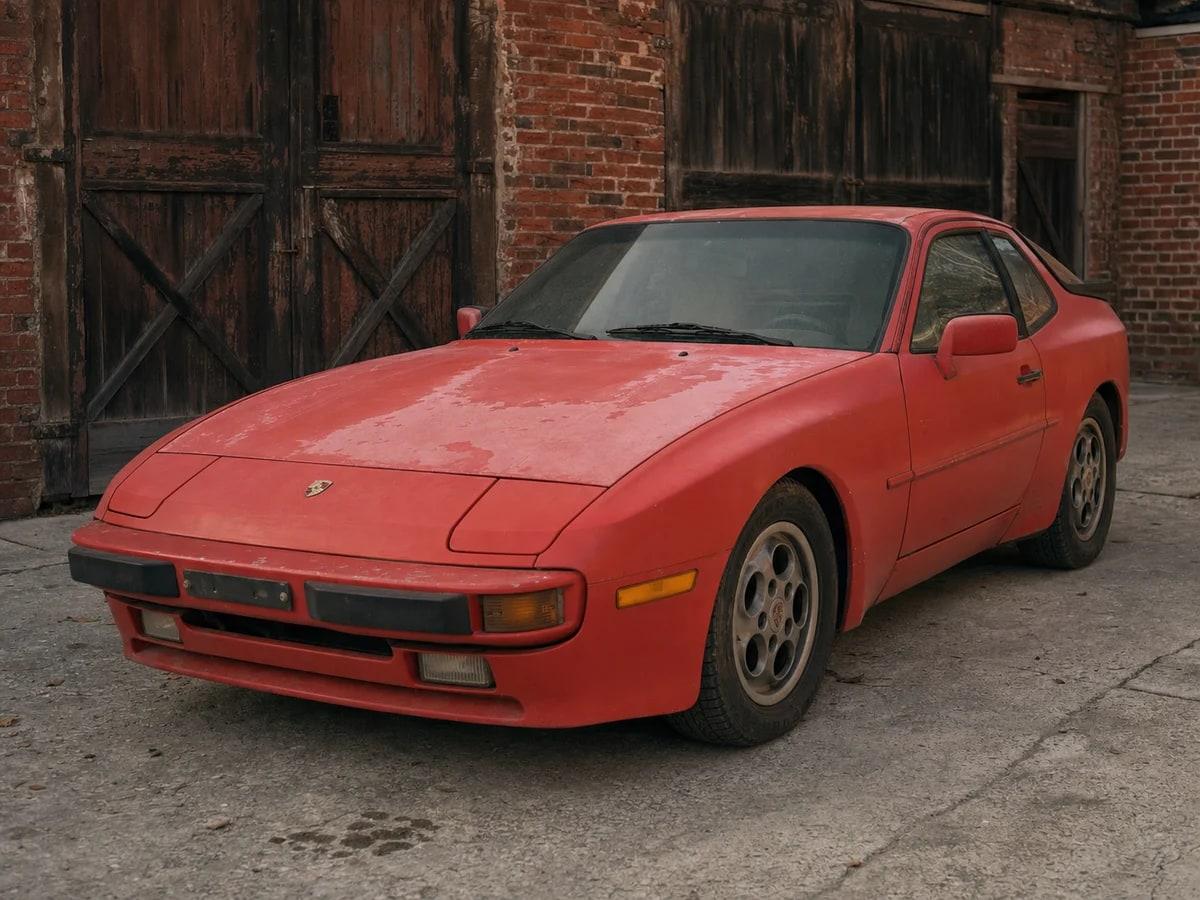
Porsche 944
1982–1991
Balanced, usable, and still misunderstood.
View Showcase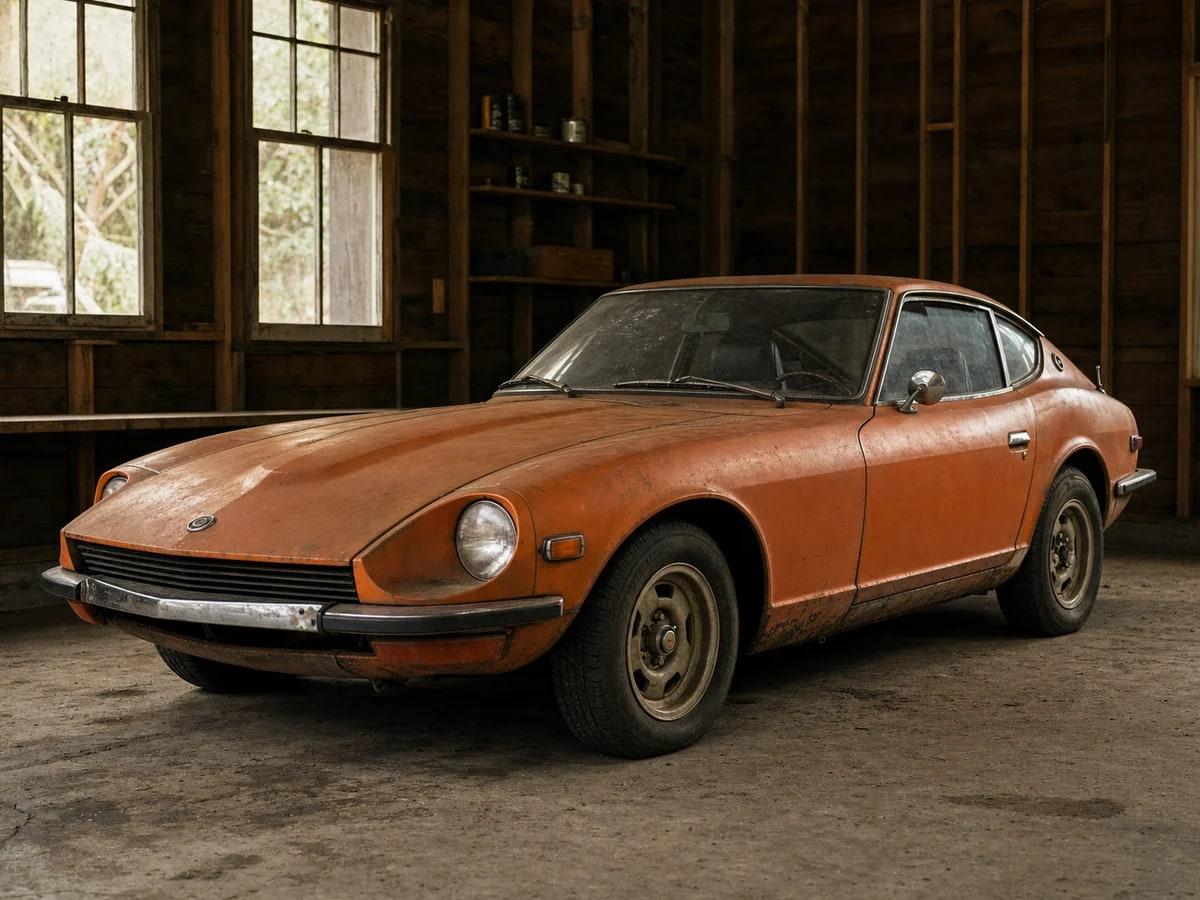
Datsun 240Z · S30
1969–1973 (240Z)
A lightweight sports car with decades of unfinished possibilities.
View ShowcaseFord Mustang · First-generation (2+2 Fastback)
1965–1968 (first-generation 2+2 fastback)
The car that invented an entire market segment.
View Showcase