
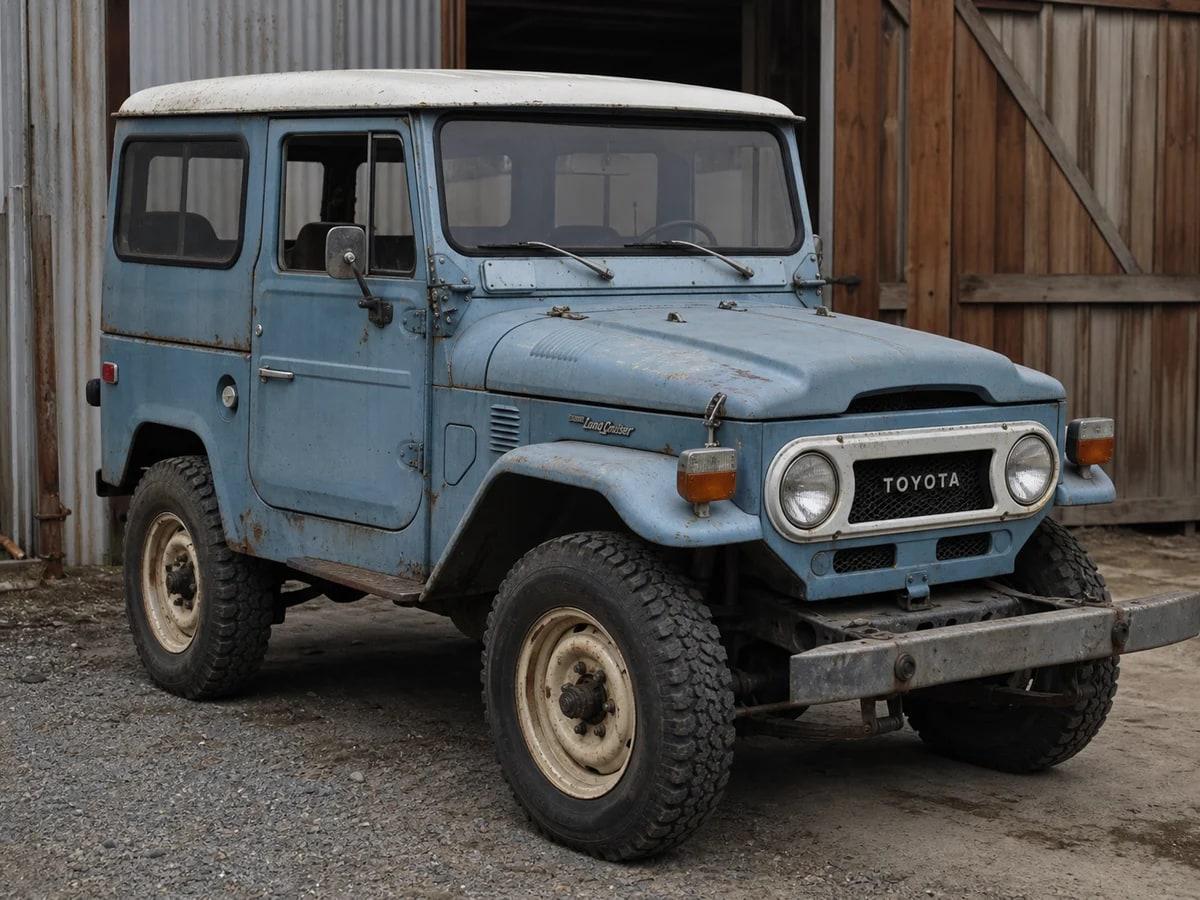
Editorial Showcase — This vehicle is not currently offered for sale through PATINA.
The image represents this model or chassis. The editorial copy below is model-level guidance and does not describe the pictured vehicle’s specific condition, history, or ownership.
1960–1984 · SUV / 4x4
Toyota Land Cruiser — FJ40
Simple, boxy, and built to be used hard.
The FJ40 was engineered for reliability in places with no parts store for hundreds of miles, and that same mechanical simplicity is what makes it such an approachable restoration project today — even as collector demand has pushed clean examples well past their utilitarian origins.
Toyota built the FJ40 Land Cruiser from 1960 to 1984 as a rugged, solid-axle 4x4 aimed squarely at durability over comfort. Power came from Toyota's F-series and later 2F inline-six engines, mated to part-time four-wheel drive with low-range gearing. Decades of real-world use in demanding conditions built the FJ40's reputation, and that same simplicity — few electronics, straightforward mechanicals — is exactly what makes it approachable as a project today.
The FJ40 grew out of Toyota's earlier Jeep-influenced BJ/FJ prototypes, evolving into a dedicated model built for agricultural, military, and expedition use worldwide. Its solid front and rear axles, low-range transfer case, and torquey inline-six were chosen for serviceability in remote conditions, not comfort — there was no pretense of being a road car.
That utilitarian mission is precisely why the FJ40 has aged into such a beloved platform. There's very little to fail that can't be diagnosed with hand tools, and the mechanical layout has barely anything in common with the sensor-and-module complexity of modern 4x4s. Enthusiasts who want to understand every system in their vehicle gravitate toward the FJ40 for exactly that reason.
Collector demand for clean, restored FJ40s has risen sharply over the past decade, which means a nicely finished example now commands real money — a strange twist for a vehicle designed with zero luxury pretense. Project-condition trucks, particularly those with frame or body rust, remain the more attainable entry point for buyers willing to do the work.
- A mechanically simple, solid-axle platform that rewards hands-on ownership and hand-tool-level diagnosis.
- Genuine off-road and overland capability that still holds up against modern purpose-built vehicles.
- A strong specialist restoration industry has grown around the model, supporting everything from full frame-off rebuilds to reproduction sheet metal.
- One of the clearest examples of a utilitarian vehicle crossing into collector territory without losing its original mechanical character.
- Engine
- 3.9L F-series inline-6 (early); 4.2L 2F inline-6 (later years)
- Transmission
- 3-speed or 4-speed manual with 2-speed transfer case
- Drivetrain
- Part-time four-wheel drive, solid front and rear axles
- Production Period
- 1960–1984 (FJ40 generation)
- Curb Weight
- Approximately 3,300–3,600 lb depending on configuration
- Frame rails for rust-through, especially where the boxed sections trap moisture
- Floor pans, rocker panels, and body mounts for corrosion
- Rear main seal and axle seals for oil leaks, a common age-related issue
- Front axle king-pins for wear and proper lubrication history
- Carburetor condition and fuel system, since long periods of storage often leave gummed-up fuel systems
- Evidence of prior drivetrain swaps and how well they were documented and executed
- Rising collector demand means restored examples carry prices well beyond what the vehicle's original simplicity might suggest.
- Small year-to-year specification changes mean parts aren't always a universal fit across the full 1960–1984 run — confirm compatibility before buying.
- Power output is modest by modern standards, which shapes realistic expectations for a driver-quality build versus a full resto-mod.
- Frame condition should be treated as a dealbreaker-level inspection item, not a cosmetic one.
Good. A dedicated specialist industry supports the FJ40 with reproduction sheet metal, mechanical parts, and full restoration services. Some trim and NOS badging can be expensive due to collector demand, but core mechanical and structural parts are realistically sourced.
- PATINA Concept Studio · OpenAI ImageGen · Generated for PATINA
- PATINA Concept Studio · OpenAI ImageGen · Generated for PATINA
Have a similar car?
PATINA is always looking for enthusiast vehicles with a story still left to tell.
Submit Your Car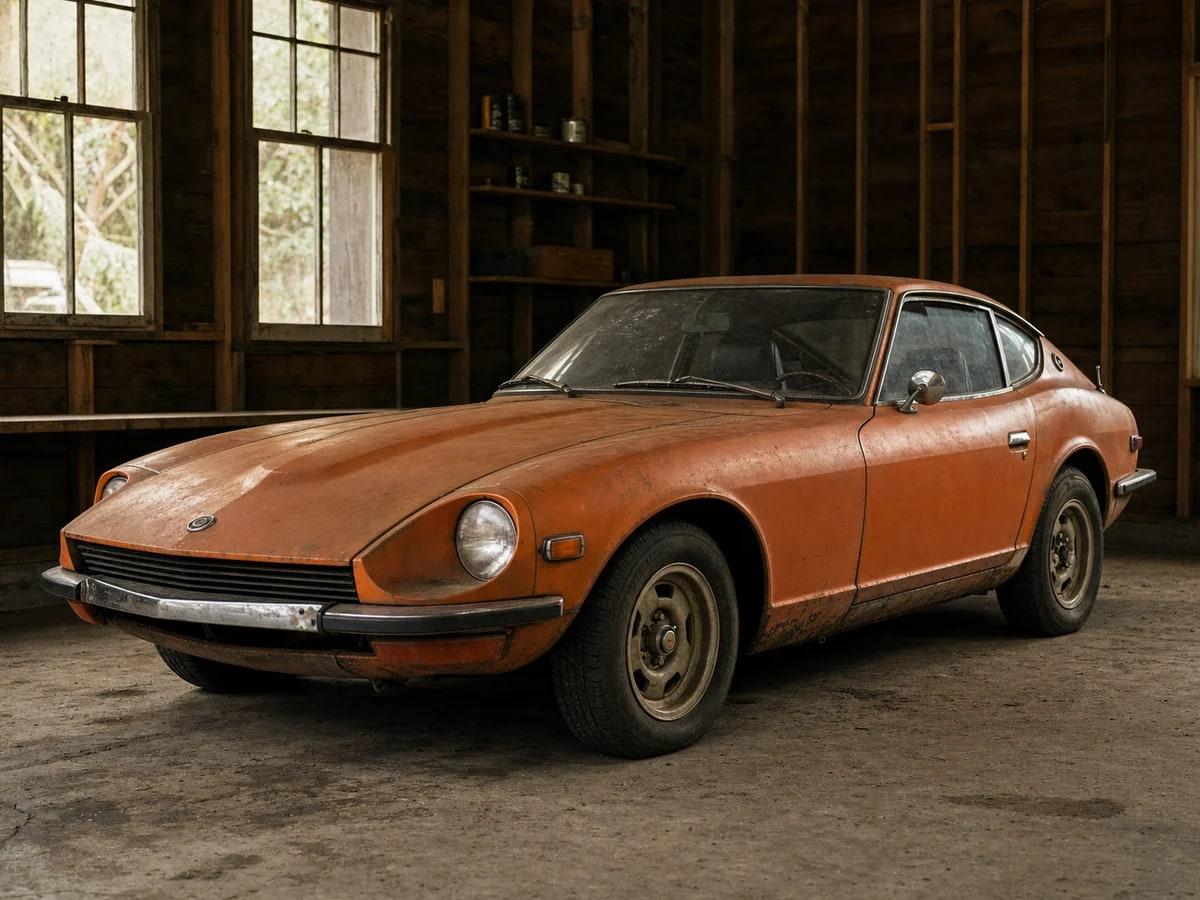
Datsun 240Z · S30
1969–1973 (240Z)
A lightweight sports car with decades of unfinished possibilities.
View ShowcaseChevrolet C10 · Second-generation ('Action Line')
1967–1972 (second-generation C10)
A work truck that became one of the most flexible project platforms on the road.
View Showcase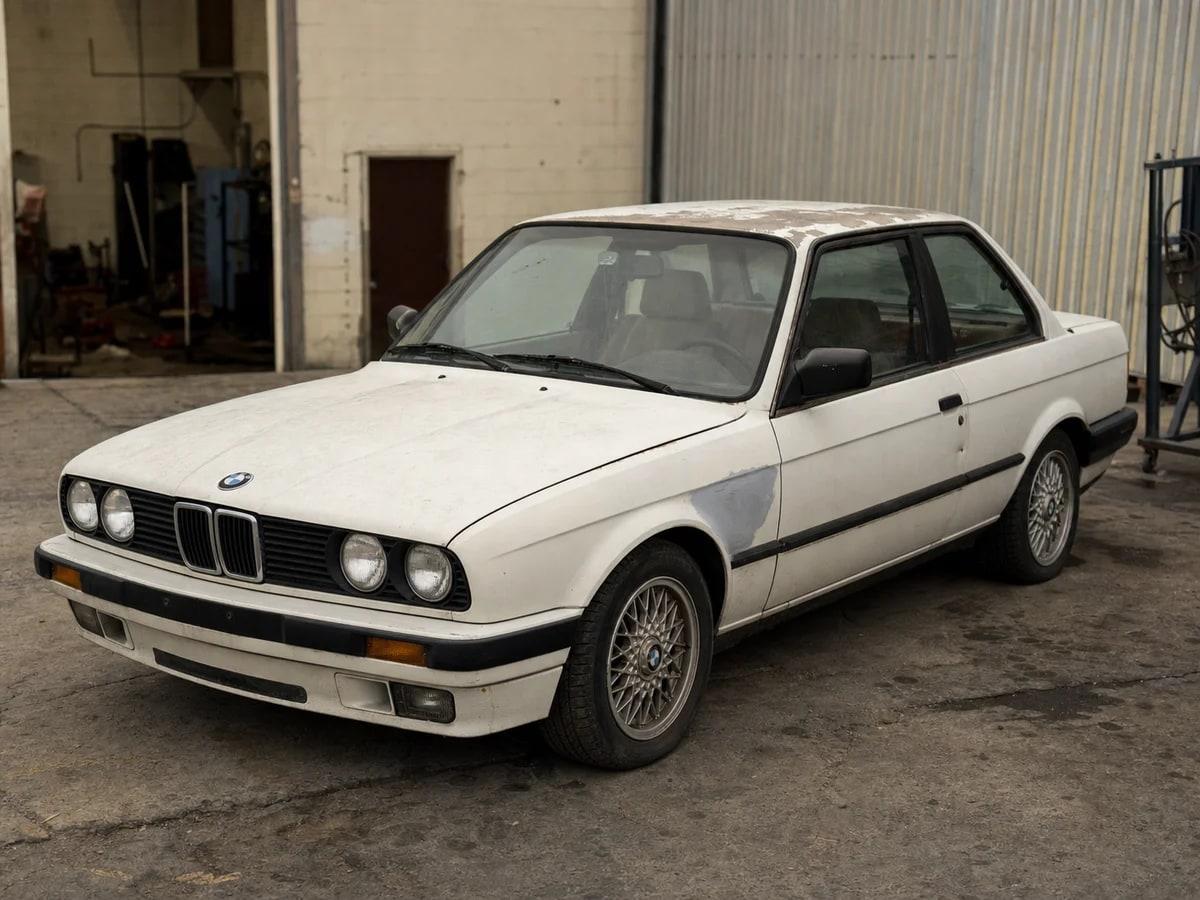
BMW 3 Series · E30
1982–1994
The analog BMW that became a language of its own.
View Showcase